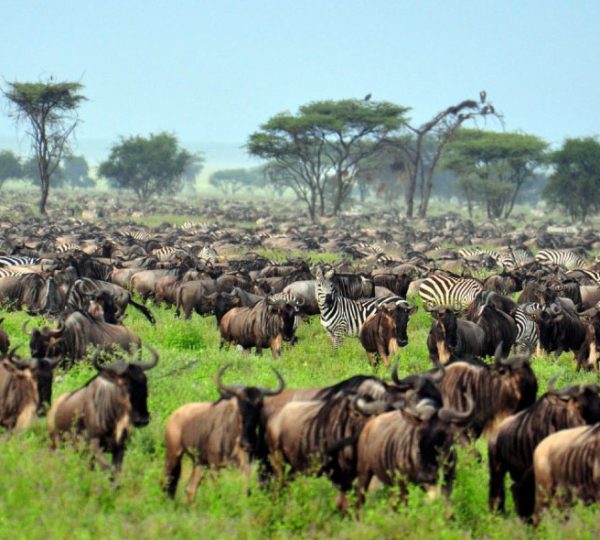
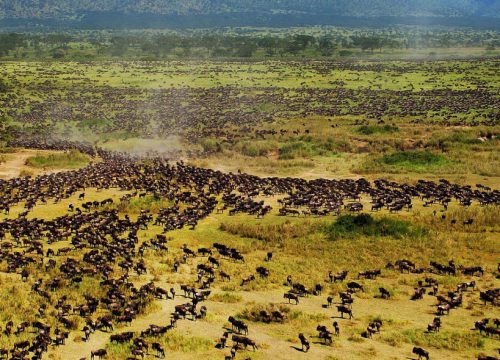
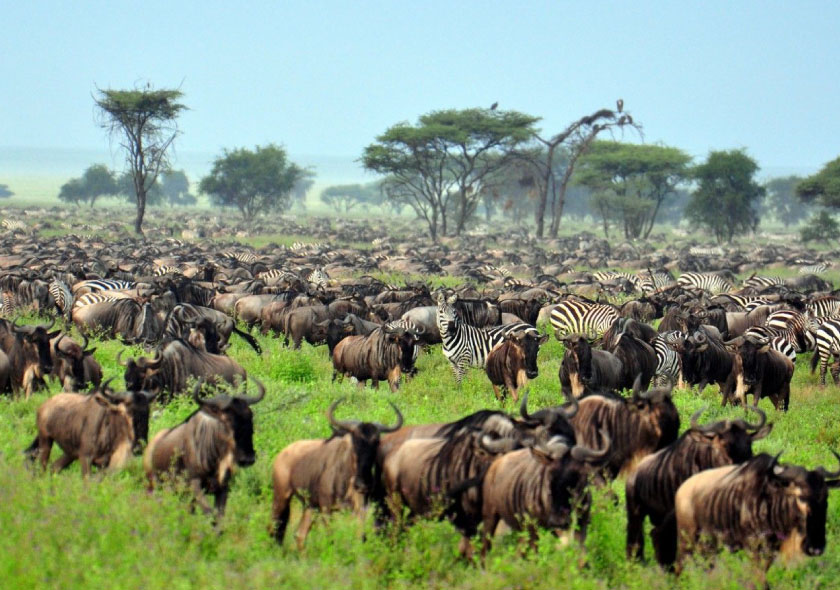
July – October: This is when the wildebeest are in the northern Serengeti plains, and you have a chance of seeing up to thousands crossing the great Mara River. As the sight of the wildebeest crossing is so dramatic, it is considered by many to be the most desirable time to see the migration.
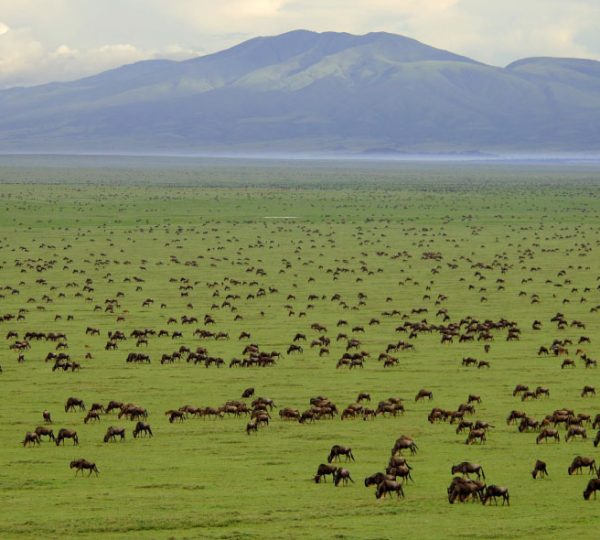
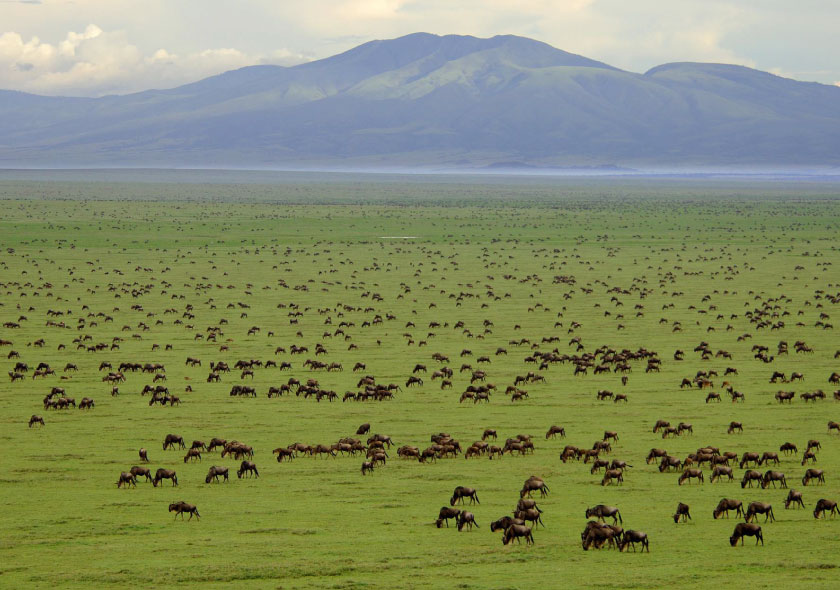
December – March: Currently, the wildebeest are in the southern area of the Serengeti, more specifically in Ndutu, which is actually in the Ngorongoro Conservation Area, and it is calving season. Along with the river crossings, this is a real highlight of the wildebeest’s journey and a fabulous time to see the herds congregate on the dramatic sweeping plains of the south. February is the only time of year when you are almost guaranteed to see the big herds all together as they always come south for calving season.
The rest of the year: In November, April, May, and June, the migration is “in between” locations, and as such, these months are slightly transitional times to see the herds. November is the short rains, April and May are the long rains, and as such, the grass is green in these months across the Serengeti, so the wildebeest are more dispersed than in the prime time of July – October and December – March. Thus, you don’t get as many of those condensed big herds which people get excited about!
Although we try to be as comprehensive as possible, something that is quite difficult to express on paper is a lot easier to explain over the phone, so please do just give us a call for a simple overview of the Migration’s route.